Window Treatments 101: Curtains, Shades & Common Mistakes | Katie Lynn Homes & Design
Window treatments are one of the most overlooked details in a home — and one of the most telling. Get them right and a room instantly feels finished, taller, and more expensive. Get them wrong and even a beautiful space feels a little "off," though most people can't say why. The good news: the rules are simple once you know them. Here's a designer's guide to curtains, shades, and the small choices that make a big difference.
The two families: soft and hard
Window treatments fall into two broad groups. Soft treatments — curtains and drapery — add warmth, height, softness, and a finished frame to a room. Hard treatments — shades, blinds, shutters, and woven woods — are more tailored and practical for light control and privacy. The most polished rooms often layer the two: a shade for function, drapery panels for beauty. You get the best of both.
The mistake almost everyone makes: hanging too low and too narrow
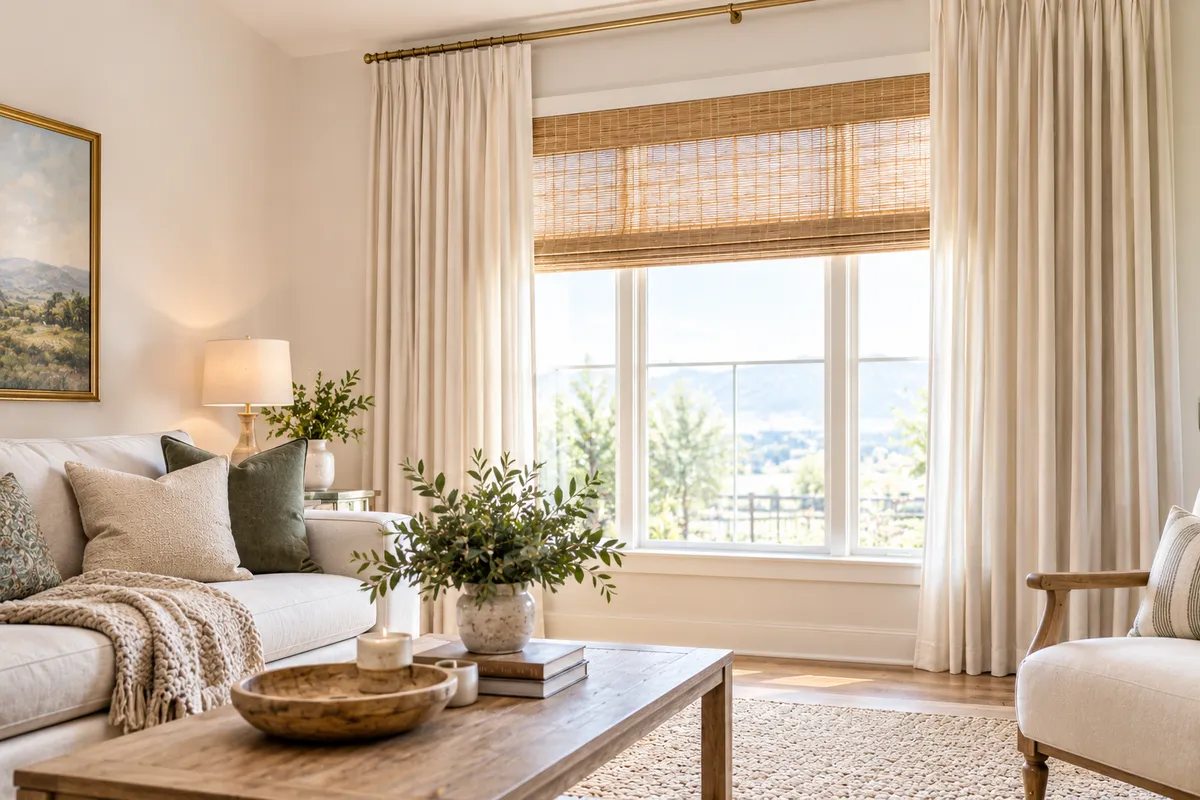
If you remember one thing, make it this. Most people mount curtain rods right at the top of the window frame and only as wide as the window — and it makes the window look small and the ceilings low. The designer move is to hang high and wide: mount the rod closer to the ceiling and extend it several inches past each side of the window. This makes windows look larger, ceilings taller, and the whole room more grand — with the exact same panels.
Get the length right
Length matters as much as height. For drapery, the panels should reach the floor — not float awkwardly above it. Depending on the look you want, aim for a "kiss" (just brushing the floor), a slight "break" (a small fold), or a soft puddle for a more romantic feel. What you want to avoid is the too-short, "high-water" curtain, which instantly cheapens a room. When in doubt, go a touch longer.
Choosing the right fabric and function
Let the room's job guide the material. Bedrooms often benefit from room-darkening or lined drapery for better sleep; living rooms may want light-filtering fabrics that keep things bright but private; kitchens and baths call for easy-care, moisture-friendly options. Heavier fabrics feel warm and luxe (and help in winter); lighter linens feel airy and relaxed. The fabric sets the mood as much as the color.
When to layer
Layering is where rooms go from nice to designed. A common, high-impact combination is a functional shade (like a woven wood or roller shade) paired with drapery panels on either side. The shade handles light and privacy; the panels frame the window and add softness. It's a look that works in almost every room and instantly reads as intentional and complete.
Frequently asked questions
How high should I hang curtains? High and wide — mount the rod closer to the ceiling and extend it several inches beyond each side of the window. This makes windows look larger and ceilings taller.
How long should curtains be? They should reach the floor — either just kissing it, with a slight break, or a soft puddle. Avoid short "high-water" curtains, which make a room look unfinished.
What's the difference between soft and hard window treatments? Soft treatments (curtains, drapery) add warmth and height; hard treatments (shades, blinds, shutters) are tailored and practical for light and privacy. Layering both gives the most polished result.
Should I layer shades and curtains? Often yes. A functional shade plus drapery panels handles light and privacy while framing the window beautifully — a look that works in nearly every room.
Frame every window beautifully
Not sure what treatment (or length, or layering) is right for your windows? Book a consultation (https://katielynnhomesanddesign.com/book-consultation-page) and we'll get them right, or explore the services (https://katielynnhomesanddesign.com/services) to see what fits.


