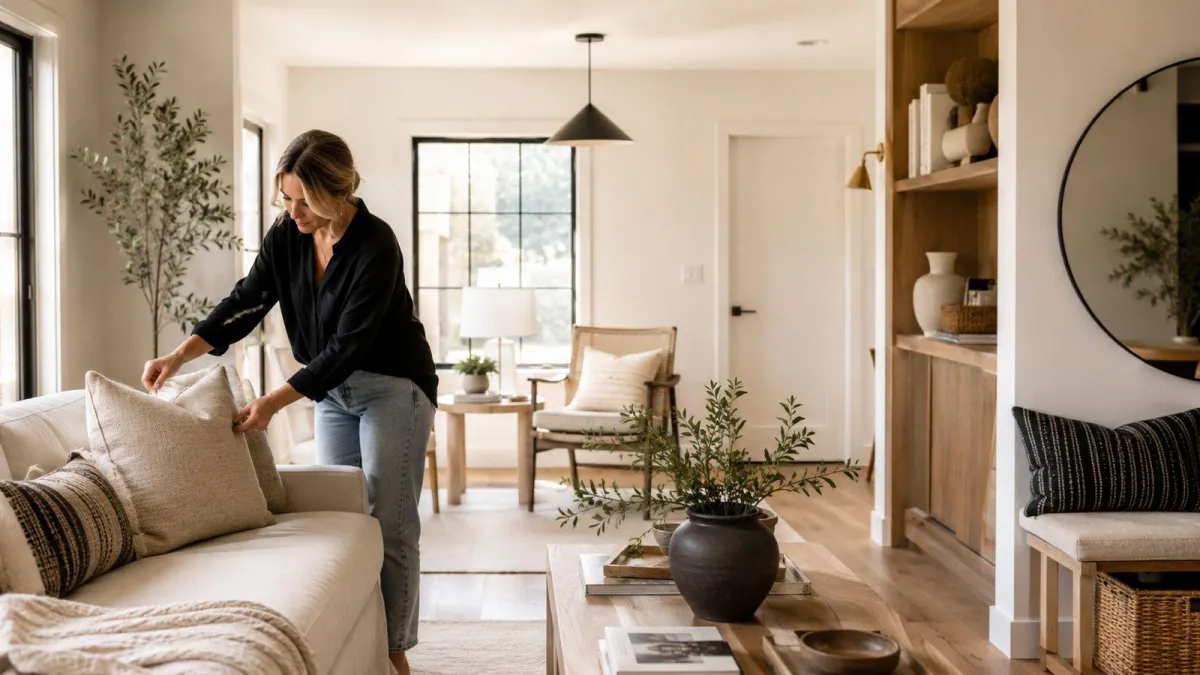
How to Make a Small Room Feel Bigger | Katie Lynn Homes & Design
A small room isn't a problem to fix — it's a space to make feel intentional. Cramped comes from clutter and choices, not square footage. With a few designer moves around light, scale, and color, even a tiny room can feel open, airy, and like a soft place to land. Here are seven of my favorites.
1. Let the light in (and bounce it around)
Nothing opens a room like light. Keep window treatments simple and high, choose light-filtering fabrics, and place a mirror across from a window to bounce daylight deeper into the space. A well-placed mirror is the oldest trick in the book because it genuinely works.
2. Choose fewer, larger pieces
It feels backwards, but lots of small furniture makes a room feel busy and cramped. A few properly scaled pieces — one real sofa instead of two little chairs and three tiny tables — actually reads as calmer and more spacious. Let each piece breathe.
3. Keep the palette light and connected
Soft, cohesive colors blur the edges of a room so your eye keeps moving instead of stopping at boundaries. That doesn't mean all-white — warm, tonal palettes feel cozy and open. Save the bold, dark drama for a single accent.
4. Draw the eye up
Hang curtains near the ceiling, add a tall plant or a vertical piece of art, and use lamps to layer light at different heights. When the eye travels upward, the whole room feels taller.
5. Give everything a home
In a small space, clutter shows instantly. Smart, pretty storage — baskets, a lidded ottoman, closed cabinets — keeps surfaces calm. A tidy room always feels bigger than a full one.
Quick do's and don'ts
Do Don't
Use a few well-scaled pieces Crowd the room with lots of small ones
Hang curtains high and wide Mount them low and narrow
Keep a light, connected palette Chop the room up with clashing colors
Add mirrors and layered lighting Rely on one harsh overhead light
Frequently asked questions
What colors make a small room look bigger?
Light, warm, connected tones tend to open a space, but it's less about "white" and more about a cohesive palette that lets your eye flow without stopping.
Does furniture size really matter in a small room?
Yes — a few properly scaled pieces read calmer and roomier than many small ones. Scale is one of the biggest levers in small-space design.
Do mirrors actually help?
They do — placed across from a window, a mirror bounces natural light and adds visual depth, making the room feel brighter and larger.
Can you help with a tricky small layout?
Absolutely — awkward, small, and oddly shaped rooms are some of my favorite puzzles to solve.
Love your small space
Every room deserves to feel open and intentional. Book a consultation and let's reimagine yours, or explore the services to see what fits.


