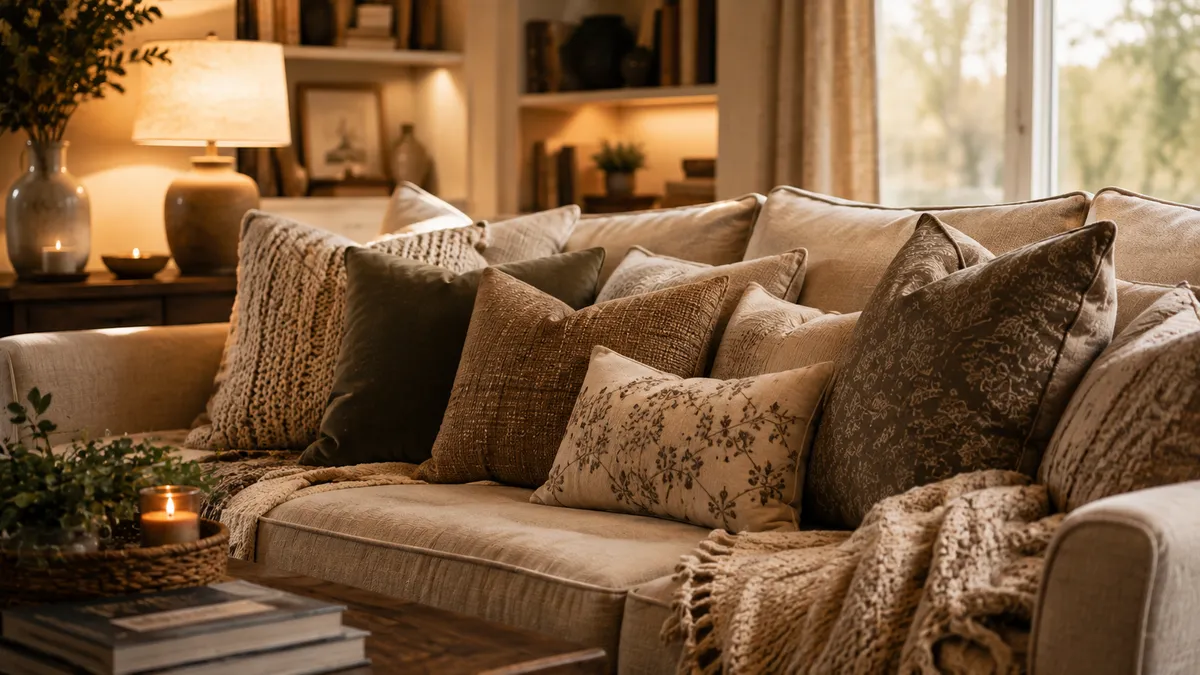
How to Mix Patterns & Textures (Without the Chaos) | Katie Lynn Homes & Design
Short answer: mixing patterns and textures is what makes a home feel collected and warm instead of flat and "showroom" — but it's easy to tip into chaos. The secret isn't matching everything; it's giving your mixes a common thread and varying the scale. Once you know the simple formula, layering becomes the fun part. Here's how to do it without it looking busy.
Why texture is the easy win
Start with texture, because it's almost impossible to overdo. Linen, wool, velvet, wood, ceramic, rattan, a chunky knit — combining different textures adds richness and warmth even in a totally neutral room. If your space feels flat or cold, you probably have a texture problem, not a color problem. Layer in materials before you reach for bold pattern.
The pattern-mixing formula
Patterns are where people get nervous, but a simple recipe keeps it cohesive:
Vary the scale. Pair a large-scale pattern with a medium and a small one. Same-size patterns fight each other; different scales harmonize.
Share a color thread. Let your patterns pull from the same palette so they feel intentional, even if the motifs are different.
Mix pattern types. Combine a floral, a stripe or check, and an organic or geometric — different kinds of pattern play together better than three of the same.
Anchor with solids. Give the eye places to rest. Solids and quiet textures keep a mix from feeling frantic.
The "one bold, one calm" trick
If you're unsure, follow this: for every bold pattern, add a calm one. A statement floral pillow pairs beautifully with a simple stripe and a solid. That rhythm of bold-and-calm is what makes designer rooms feel layered but never chaotic — energy balanced by rest.
How to know when to stop
A collected room still needs breathing room. If a space feels busy, remove one thing and add a solid or a natural texture in its place. The goal is "layered and warm," not "every surface competing." When in doubt, edit — the most sophisticated rooms know when to be quiet.
Frequently asked questions
How do I mix patterns without clashing? Vary the scale (large, medium, small), keep a shared color thread, mix different types of pattern, and anchor everything with solids and texture.
Isn't it safer to just match everything? Matching feels flat and "showroom." Thoughtful mixing is what makes a home feel collected, warm, and personal — it just needs a common thread.
Where should I start if I'm nervous? Start with texture — it's nearly foolproof — then add pattern using the "one bold, one calm" rule.
How do I know if I've overdone it? If the room feels busy or there's nowhere for your eye to rest, remove one piece and add a solid or natural texture instead.
Let's layer your home the right way
A collected, layered home is one of the warmest things there is — and it's easier with a guide. Book a consultation (https://katielynnhomesanddesign.com/book-consultation-page), or explore the services (https://katielynnhomesanddesign.com/services) to see what fits.


